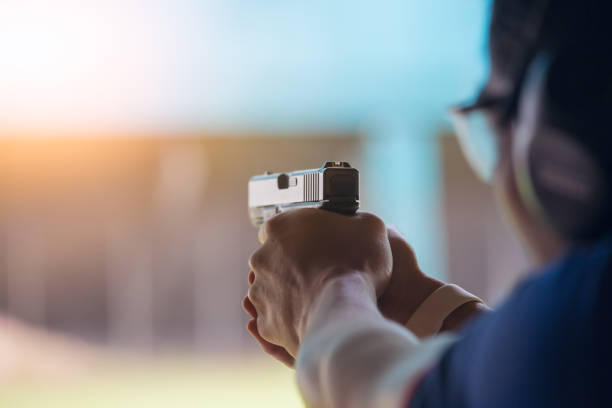
While they may appear similar at a glance, these two firearm types differ significantly in design, functionality, and use cases. Understanding their key differences can help you make an informed decision when selecting the firearm that best suits your needs.
Design and Mechanism
- Minimal mechanical complexity makes it highly reliable.
- Uses a magazine to feed ammunition into the firing chamber. Magazines typically hold 10-15 rounds or more, depending on the model.
- Semi-automatic action allows for quicker follow-up shots as each trigger pull automatically chambers a new round.
| Feature | Revolver | Pistol |
| Ammunition Capacity | Typically 5-7 rounds | Varies; often 10+ rounds |
| Reloading Speed | Slower; manual cylinder reload | Faster; swap magazines quickly |
| Complexity | Simple design | Mechanically more complex |
Ease of Use
- Simpler operation due to fewer moving parts.
- Ideal for beginners as it does not require manual racking or chambering.
- Low likelihood of jamming or malfunctioning in high-stress situations.
- Require learning additional mechanics such as racking the slide.
- Slightly steeper learning curve but offers faster reloading with magazines.
- Often preferred by those who prioritize higher ammunition capacity.
Maintenance and Durability
- Revolvers tend to be more robust due to their simpler construction, requiring less frequent maintenance compared to pistols.
- Pistols feature tighter tolerances and may be more susceptible to dirt or debris affecting performance without regular upkeep.
Practical Applications
- Excellent for home defense due to reliability.
- Preferred by some hunters for their powerful calibers (e. g. , . 357 Magnum).
- Popular among law enforcement professionals due to higher capacity.
- Favored in competitive shooting sports requiring fast reloads.
Understanding these distinctions ensures you select a firearm tailored not only to your skill level but also aligned with your purpose—be it self-defense, recreational shooting, or professional use.
Essential Tips for Finding the Best Handguns for Sale
When purchasing a firearm, selecting the right gun for your specific needs is critical. Whether you’re buying a gun for self-defense, hunting, sport shooting, or collection purposes, there are various factors to weigh before making your decision. This guide will help you analyze these key considerations to ensure that your choice aligns with your goals.
Finding the Right Purpose at a Handguns Online Store
Start by identifying why you need a firearm.
- Self-Defense: Compact pistols or revolvers are often preferred due to their ease of carry and quick accessibility.
- Hunting: Rifles and shotguns are commonly used for hunting due to their range and precision.
- Sport Shooting: Handguns, rifles, or shotguns tailored for accuracy and reliability are ideal for competitive shooting.
- Collection: If you’re an enthusiast or collector, historical significance or rarity may be more important than functionality.
Understanding your primary purpose will narrow down your options significantly.
Firearm Types
Each type of firearm has its own advantages and limitations.
| Type | Advantages | Limitations |
| Handgun | Portable, easy to conceal | Limited range |
| Rifle | Long-range accuracy | More challenging to transport |
| Shotgun | Ideal for close-range targets | Less effective at long distances |
Knowing what each type offers helps you choose a weapon best suited to its intended use.
Caliber Selection
The caliber refers to the diameter of the bullet that a firearm can fire. It impacts factors such as stopping power, recoil, and ammunition availability.
- Recoil Management: Larger calibers pack more power but also generate stronger recoil.
- Ammunition Cost: Smaller calibers like . 22 LR tend to be more affordable.
- Effectiveness: For self-defense, popular options include 9mm and . 45 ACP due to their balance between stopping power and controllability.
Size and Weight
The size and weight of the firearm influence how comfortable it is to use or carry.
- For concealed carry weapons (CCWs), compact or subcompact models are easier to handle discreetly.
- Larger firearms may offer better accuracy but could be less practical for everyday carry.
Balance comfort with functionality when evaluating size and weight.
Ergonomics
A gun that feels natural in your hands will improve handling and overall performance.
- Grip design—does it fit comfortably in your palm?
- Trigger pull resistance—is it too light or too heavy?
- Overall balance—does the firearm feel well-distributed when held?
Ergonomics plays an essential role in both accuracy and safety during usage.
Safety Features
Modern firearms come equipped with various safety mechanisms designed to prevent accidental discharges.
- Manual safeties
- Trigger safeties
- Decocking levers (for double-action pistols)
Prioritize models that offer robust safety features if you’re new to firearms handling.
Budget Considerations
Firearms vary widely in price depending on brand reputation, reliability, material quality, and additional features. Be sure to set a realistic budget that accounts not only for the firearm itself but also accessories like holsters, sights, cleaning kits, and ammunition.
Choosing the right gun entails careful consideration of multiple factors tailored specifically toward your needs. By assessing your purpose along with technical details like caliber selection, ergonomics, safety features, size preferences, and budget constraints systematically—and understanding how these elements interact—you’ll be positioned to make an informed purchase decision that ensures both effectiveness and satisfaction in use.
The Importance of Caliber and How It Affects Gun Performance and Effectiveness
Choosing the right caliber is one of the most critical decisions when selecting a firearm. Caliber refers to the internal diameter of a gun’s barrel or the diameter of the bullet it fires. It directly impacts factors such as accuracy, stopping power, recoil, and overall usability. Understanding how caliber affects gun performance and effectiveness is essential for matching your firearm to your intended purpose.
What Is Caliber?
In firearms terminology, caliber is typically measured in inches or millimeters.
– .22 caliberrefers to a barrel with a 0. 22-inch diameter.
– 9mm caliberdenotes a barrel with a diameter of 9 millimeters.
The choice of caliber also determines the size and type of ammunition that will be used with your firearm.
Key Factors Affected by Caliber
- Stopping Power
Stopping power refers to a bullet’s ability to incapacitate or stop a target effectively. Larger calibers, such as . 45 ACP or 10mm, generally provide more stopping power due to their greater mass and energy transfer upon impact. Smaller calibers like . 22 LR may lack immediate stopping power but are sufficient for target practice or small game hunting. - Recoil
Recoil increases as the caliber size grows because larger rounds produce more force when fired. While higher-caliber guns like . 44 Magnum offer significant power, they can also be more challenging for beginners due to stronger recoil forces. - Accuracy
Accuracy depends not only on skill but also on how well you can handle recoil and maintain control over your weapon. Smaller calibers often allow for quicker follow-up shots due to lower recoil levels, making them popular choices for competition shooting or self-defense scenarios where precision is critical. - Penetration
The penetration capability varies significantly between calibers: - Smaller calibers, like . 22 LR or . 380 ACP, may struggle with thick barriers.
- Medium calibers such as 9mm balance penetration and stopping power effectively.
- Larger calibers have higher penetration levels but may over-penetrate in certain situations, posing risks in urban environments.
Common Calibers: Pros & Cons Table
| Caliber | Common Uses | Pros | Cons |
| .22 LR | Target shooting, training | Low recoil; affordable ammo | Limited stopping power |
| 9mm | Self-defense | Manageable recoil; good balance | May lack sufficient penetration in some cases |
| .45 ACP | Home defense | High stopping power | Stronger recoil; heavier ammunition |
| .308 Winchester | Hunting | Long-range accuracy; powerful round | Expensive ammo; high recoil |
Matching Caliber to Your Needs
To make an informed choice:
1. Assess your primary use (e. g. , self-defense, target practice). For self-defense purposes, 9mm is widely regarded as suitable due to its balance between effectiveness and manageability. 2. Test different calibers if possible at a gun range; this helps you gauge comfort with factors like recoil. 3. Consider ammunition availability and cost – certain calibers are easier to find than others depending on location.
By understanding how caliber affects both performance and functionality, you can ensure that your firearm meets your specific needs efficiently while aligning with safety and comfort preferences during use.

How Size, Weight, and Design Influence Your Gun Choice
When selecting a firearm, factors such as size, weight, and design play a critical role in determining comfort, usability, and overall effectiveness. These attributes directly impact how well a gun aligns with your intended use, whether for self-defense, hunting, sport shooting, or professional applications. Below is an in-depth exploration of these factors to help guide your decision-making process.
Size: Concealment vs.
The size of a firearm affects its portability and ease of handling.
- Ideal for concealed carry.
- Easier to store and transport discreetly.
- Suitable for close-range self-defense situations.
- Examples: Subcompact pistols like the Glock 43 or Sig Sauer P365.
- Typically offer better accuracy due to longer sight radius.
- More comfortable grip for larger hands or extended use.
- Commonly used in home defense or professional law enforcement roles.
- Examples: Full-size handguns like the Beretta M9 or Smith & Wesson M&P9.
When choosing between compact and full-size guns, consider where you’ll carry it and how frequently you’ll require quick access.
Weight: Balancing Control and Comfort
Firearm weight significantly influences control during shooting as well as fatigue during extended carry.
- Easier to carry over long periods.
- Can be harder to control due to increased recoil.
- Often made from polymer materials.
- Better at managing recoil for smoother follow-up shots.
- Can be tiring if carried on your person throughout the day.
- Typically constructed from steel or alloy materials for durability.
For example: | Type | Weight Range | Recommendation | |———————|————————-|———————————–| | Subcompact Pistol | ~12-20 oz unloaded | Best for concealed everyday carry | | Full-Sized Revolver | ~35-45 oz unloaded | Ideal for home defense scenarios |
Evaluate your priorities—whether it’s carrying comfort versus shooting stability—when considering weight.
Design: Ergonomics and Aesthetic Features
- Grip Shape & Texture
A textured grip or ergonomic contouring enhances control and reduces slippage during firing. - Trigger Guard Design
Ample space within the trigger guard ensures accessibility even when wearing gloves. - Slide Serrations & Controls Positioning
Features like serrated slides improve ease of operation during chambering rounds or clearing malfunctions.
Some firearms also emphasize aesthetics without sacrificing functionality—for instance, customized finishes or minimalistic designs that appeal to personal preferences while remaining practical.
Final Thoughts
By carefully considering size for portability needs, weight for recoil management versus carrying comfort, and design elements that enhance ergonomics or usability, you can make a more informed decision when selecting the right gun for your needs.
Understanding Gun Action, Safety Features, and Trigger Mechanisms for Better Decision-Making
When purchasing a firearm, understanding its action type, safety features, and trigger mechanisms is essential to ensure it aligns with your intended use and personal preferences. Each component significantly impacts the firearm’s functionality, handling, and overall safety.
Gun Action Types: What You Need to Know
The actionof a firearm refers to how it loads, fires, and ejects cartridges. The choice of action type depends on how you plan to use the gun—whether for self-defense, recreational shooting, or hunting.
- Requires manually cocking the hammer before firing.
- Commonly found in revolvers or older firearms.
- Offers a light trigger pull for increased accuracy.
- Fires by pulling the trigger without manually cocking the hammer.
- Typically has a heavier trigger pull compared to single-action.
- Reduces preparation time in critical situations.
- Combines both action types in one firearm.
- The first shot is double-action; subsequent shots are single-action after the hammer resets.
- Automatically reloads after each shot but requires one trigger pull per round fired.
- Popular for handguns due to their efficiency and quick follow-up shots.
- Manually operated by manipulating a bolt handle between rounds.
- Commonly used in hunting rifles due to precision.
Key Safety Features in Firearms
Safety features are critical when selecting a firearm. They help prevent accidental discharges and ensure responsible handling.
- A physical switch or lever that must be engaged or disengaged manually to fire.
- Found on certain pistols; requires proper grip pressure before firing can occur.
- Integrated into the trigger itself; ensures that only intentional pulls will discharge the firearm.
- Prevents accidental discharge if the gun is dropped or subjected to impact.
- Blocks the firing pin from striking unless proper force is exerted via the trigger pull.
Safety should never be an afterthought—always practice vigilance while handling firearms even with these features in place.
Trigger Mechanisms Explained
| Trigger Type | Description | Common Usage |
| Single-Stage Trigger | A consistent pull weight from start to release; often preferred for precision shooting. | Hunting rifles or long-range shooting |
| Two-Stage Trigger | Offers initial light resistance followed by heavier resistance before breaking cleanly. | Precision shooters |
| Striker-Fired Trigger | Lacks an external hammer; provides consistent break with each shot fired. | Most modern semi-auto handguns |
| Double-Action Only (DAO) | Heavy but consistent pull as there’s no external cocking involved with each shot taken. | Concealed carry pistols |
The right trigger mechanism contributes not only to accuracy but also comfort over extended use periods.
Final Considerations
Understanding gun actions, safety features, and triggers allows you to make an informed purchase decision based on your personal needs and skills as a shooter. Whether you’re seeking reliability for self-defense or precision for target practice, evaluating these components carefully ensures you choose a firearm suited specifically for you while prioritizing safety at all times.
- How to Buy Handguns Online: Choosing Between a Revolver and a Pistol
- Handguns for Sale: Choosing Between a Revolver and a Pistol
- Exploring the Key Differences Between Pistols and Revolvers: Handguns for Sale
- Revolver vs Pistol Pros and Cons Examined for Choosing the Right Firearm
- Revolver vs. Semi-Auto Pistol: How to Buy Handguns Online for Your Needs
- Understanding Revolvers vs Pistols: A Guide to Buy Handguns Online
- How to Buy Handguns Online: Comparing Pistols and Revolvers for All Skill Levels
- How to Buy Handguns Online: Key Differences Between Revolvers and Pistols Explained
- How to Buy Handguns Online: Revolver vs Pistol and Key Differences