
When selecting a firearm, the choice between a revolver and a semi-auto pistol is one of the most crucial decisions any gun owner can make. Both options offer distinct advantages and disadvantages, depending on your specific purposes, experience level, and preferences. Below is an in-depth comparison to help you determine which firearm might best suit your needs.
Key Differences Between Revolvers and Semi-Auto Pistols
| Feature | Revolvers | Semi-Auto Pistols |
| Mechanism | Uses a revolving cylinder to hold cartridges. | Features a magazine-fed system for ammunition. |
| Capacity | Typically holds 5-6 rounds. | Can hold 8-20+ rounds depending on magazine size. |
| Ease of Use | Simple to operate with fewer moving parts. | Requires more training to handle safely due to complexity. |
| Reliability | Highly reliable; less likely to jam due to fewer components. | Susceptible to malfunctions like jamming if not properly maintained or cleaned. |
| Reloading Time | Slower reload process; requires manual loading of each chamber or using speed loaders. | Faster reloads via magazines that can be pre-loaded and swapped quickly. |
Advantages of Revolvers
- Simplicity: Revolvers are often recommended for beginners due to their straightforward design and operation.
- Reliability: Mechanical simplicity means they typically function smoothly under various conditions.
- Low Maintenance: Revolvers are easier to clean because they have fewer internal components.
- Caliber Variety: They support a wide range of calibers, including powerful options like .357 Magnum or .44 Magnum.
Disadvantages of Revolvers
- Limited ammunition capacity compared to semi-auto pistols.
- Larger and heavier in some cases, making them less suitable for concealed carry.
- Slower reloading times can make them less favorable in high-pressure scenarios.
Advantages of Semi-Auto Pistols
- Higher Capacity: Many semi-auto pistols hold significantly more rounds than revolvers, making them ideal for situations where capacity matters.
- Faster Reloading: Magazines allow quick reloading during emergencies or tactical use.
- Compact Designs Available: Slimmer profiles make many semi-auto pistols better choices for concealed carry applications.
- Diverse Options: Available in numerous calibers, sizes, and configurations tailored for personal defense, sport shooting, or competition.
Disadvantages of Semi-Auto Pistols
- Requires regular maintenance; failure to clean properly may result in jamming or misfires.
- The learning curve is steeper due to features like safeties, slide operation, and potential malfunctions.
- Less suitable for those seeking simplicity in firearm mechanics.
Choosing Based on Needs
- If you prioritize simplicity, reliability, and ease of maintenance for home defense or recreational shooting, a revolver may be the right choice.
- For those seeking higher capacity and quicker reload speeds in self-defense situations or competitive shooting environments, consider a semi-auto pistol.
Your intended use — whether it’s home defense, concealed carry, hunting sidearms, or target shooting — plays an essential role in determining which firearm will perform best under your specific conditions.
By carefully weighing the pros and cons listed above while assessing your skill level and intended use cases, you’ll be better equipped to choose between these two popular firearm categories effectively.
Comparing Revolvers and Semi-Auto Pistols: Insights from a Handguns Online Store
When selecting a firearm, understanding the advantages and disadvantages of revolvers and semi-automatic pistols is crucial. Each type has unique features that cater to specific purposes, whether for self-defense, sport shooting, or hunting. Below is a detailed comparison to help you make an informed decision.
Pros of Revolvers
- Revolvers are mechanically simpler than semi-automatic pistols, making them less prone to malfunctions.
- They don’t rely on magazines or require slide manipulation, offering consistent performance.
- Fixed cylinders mean revolvers are easy to operate, even for beginners.
- Loading and unloading can be more straightforward compared to managing magazines.
- With fewer moving parts, revolvers are easier to clean and maintain over time.
- Their resistance to jamming makes them ideal for those who prioritize functionality over complexity.
- Many revolvers can use various types of ammunition (e.g., .38 Special in a .357 Magnum revolver), enhancing their adaptability.
Cons of Revolvers
- Most revolvers hold 5-6 rounds, making them less suitable for prolonged engagements or situations requiring higher capacity.
- Unlike semi-auto pistols that use detachable magazines, reloading a revolver can take more time unless speed loaders are used.
- Revolvers tend to be bulkier and heavier than comparable semi-autos, which might make concealed carry more challenging.
Pros of Semi-Auto Pistols
- Many semi-auto pistols can hold 10-17 rounds (or more), offering increased firepower in defensive scenarios.
- Detachable magazines allow quick reloads during emergencies or extended shooting sessions.
- Slimmer profiles make semi-auto pistols easier to conceal when carrying daily.
- Semi-autos come in diverse calibers, sizes, and designs suited for different preferences and needs.
Cons of Semi-Auto Pistols
- Semi-autos require learning proper slide operation, safety mechanisms, and magazine handling.
- Beginners may need more training to avoid user-induced malfunctions like improper slide racking or “limp-wristing.”
- The moving parts in semi-auto pistols demand regular cleaning for reliable performance.
- Failure to clean regularly could increase the risk of jams under heavy use conditions.
- While rare with modern designs, issues such as stovepipes (ejected cases failing to clear the chamber) can occur under certain circumstances.
Comparison Table: Key Features at a Glance
| Feature | Revolver | Semi-Auto Pistol |
| Capacity | 5-6 rounds | 10-17+ rounds |
| Reload Speed | Slower | Faster |
| Ease of Use | Simple | Requires training |
| Concealability | Bulkier | Slimmer |
| Reliability | Highly reliable | May depend on maintenance |
| Versatility | Ammunition flexibility | Wide variety available |
Ideal Uses for Each Firearm Type
- Home defense when simplicity is prioritized (no magazine management needed).
- Outdoor activities like hiking where reliability matters most.
- Concealed carry due to their compact design.
- Self-defense scenarios requiring higher capacity or faster reloads.
By carefully considering the pros and cons listed above alongside your specific needs—whether home defense, personal protection, or recreational shooting—you can select the firearm that aligns best with your requirements.
Pros and Cons of Revolvers vs. Semi-Auto Pistols for Different Uses
When it comes to selecting a handgun, the choice between a revolver and a semi-automatic pistol often boils down to personal preferences, intended use, and specific needs. Below is a detailed exploration of the advantages and disadvantages of these two firearm types across various use cases.
Pros of Revolvers
- Mechanically simple design makes them ideal for beginners.
- No need to rack a slide; simply pull the trigger or cock the hammer.
- Fewer moving parts compared to semi-auto pistols reduce the risk of jamming or failure.
- Can fire reliably even after long-term storage without extensive maintenance.
- Widely available in powerful calibers like .357 Magnum or .44 Magnum, making them suitable for hunting or self-defense against larger threats.
- Can chamber both low-recoil rounds like .38 Special and high-powered rounds like .357 Magnum in the same firearm.
Cons of Revolvers
- Most models hold only 5 to 6 rounds (though large-frame models may hold up to eight), which may be limiting in self-defense scenarios.
- Reloading requires manual insertion of cartridges or using speed loaders, which can be time-consuming under pressure.
- Heavier than many semi-auto pistols due to steel frames and construction.
Pros of Semi-Auto Pistols
- Can carry significantly more ammunition, with standard magazines holding anywhere from 10–17 rounds (or more with extended magazines).
- Magazines can be swapped quickly, enabling faster response times during high-pressure situations.
- Typically lighter with a thinner design, making them easier to conceal for everyday carry (EDC).
- Accommodates accessories such as red-dot sights, weapon-mounted lights, suppressors, or custom grips.
Cons of Semi-Auto Pistols
- Requires familiarity with loading magazines, racking slides, and clearing malfunctions such as stovepipes or double feeds.
- More moving parts mean higher maintenance requirements to ensure continued functionality.
- May experience performance issues if low-quality ammunition is used.
Comparison Table: Revolvers vs. Semi-Auto Pistols
| Feature | Revolver | Semi-Auto Pistol |
| Capacity | Limited (5–8 rounds) | Higher (10–17+ rounds) |
| Reliability | Extremely reliable | Generally reliable but prone to jams |
| Ease of Use | Simple operation | Requires more practice |
| Concealability | Bulkier | Slimmer design |
| Reload Speed | Slower | Faster |
| Maintenance | Low maintenance | Moderate maintenance required |
Choosing Based on Intended Use
Self-defense/Home Defense: A revolver may be preferred by those seeking simplicity and reliability under stressful conditions where malfunctions could prove critical. However, individuals comfortable with proper training might benefit from the higher capacity offered by semi-autos.
Hunting/Field Use: Revolvers excel in providing more powerful calibers capable of taking down larger game animals. Their robust construction also allows better handling in rugged outdoor conditions over extended periods without cleaning.
Everyday Carry (EDC): Concealed carriers often lean toward semi-autos because they are slimmer while offering greater magazine capacity—essential qualities for personal defense situations requiring rapid response.
Ultimately, choosing between these two firearm types involves balancing your priorities—whether it’s simplicity versus capacity or power versus practicality—to select the best fit for your lifestyle and needs.

Pros and Cons of Revolvers vs. Semi-Auto Pistols for Different Uses
When deciding between a revolver and a semi-automatic pistol, understanding their strengths and weaknesses is critical. Both firearm types are widely used for purposes like self-defense, recreational shooting, and law enforcement, but they offer different features that make them suitable for specific contexts. Below is a detailed breakdown of the pros and cons of revolvers and semi-automatic pistols to help you determine which is best suited for your needs.
Advantages of Revolvers
- Revolvers are mechanically simple, leading to fewer malfunctions compared to semi-auto pistols.
- They do not rely on magazines or cycling mechanisms, making them less prone to jamming.
- These firearms are straightforward to operate—point and pull the trigger.
- Ideal for beginners who want a low-maintenance firearm.
- Fewer moving parts mean less frequent maintenance or cleaning is required compared to semi-autos.
- Revolvers can chamber powerful rounds like .357 Magnum or .44 Magnum, which are less common in semi-autos.
- Built with robust materials like stainless steel, revolvers can endure years of heavy use without losing reliability.
Disadvantages of Revolvers
- Most revolvers hold only 5-6 rounds, giving them a distinct disadvantage in situations requiring higher ammunition capacity.
- Reloading requires manually inserting cartridges or using speed loaders, making it slower than swapping magazines on a pistol.
- Revolvers tend to be heavier and bulkier than modern semi-automatic pistols, reducing their concealability.
Advantages of Semi-Automatic Pistols
- Semi-autos often hold 10-17 rounds per magazine (or more), making them ideal for scenarios where multiple shots might be necessary.
- Swapping out magazines is faster than loading individual cartridges into a revolver cylinder.
- Subcompact models make concealed carry easier while sacrificing minimal performance.
- Modern pistols often include rails for attachments (lights or lasers), ergonomic grips, and adjustable sights for enhanced customization options.
- The market offers numerous makes and models tailored to various budgets and preferences (e.g., Glock, SIG Sauer).
Disadvantages of Semi-Automatic Pistols
- Semi-auots depend on proper cycling mechanics; dirt or poor-quality ammo can lead to jams or misfires.
- Mastering magazine changes, slide operation, and troubleshooting malfunctions requires more training than handling revolvers does.
- Increased Maintenance Needs Effortlier upkeep ans cleaningoptions..
Affordable Handguns for Sale: Options for Every Budget
Double-barrel shotguns have long been a staple in the world of firearms, prized for their simplicity, reliability, and versatility. Whether you’re looking for a firearm for home defense, hunting, or recreational shooting, double-barrel shotguns offer a timeless design that caters to various needs. This guide breaks down affordable options across different budgets and highlights key factors to consider when selecting the right one.
Benefits of Double-Barrel Shotguns
- Reliability: With no reliance on complex mechanical systems, these shotguns are straightforward and dependable.
- Versatility: They work well across multiple applications—sporting clays, upland bird hunting, or even self-defense.
- Ease of Maintenance: Simple designs mean easier cleaning and less chance of malfunction.
- Classic Design: Their timeless aesthetic appeals to both novice owners and collectors alike.
Affordable Options for Every Budget
Below is a breakdown of high-quality yet budget-friendly double-barrel shotguns to suit different price ranges.
| Price Range | Recommended Models | Key Features |
| Under $500 | Stoeger Uplander Field | Durable construction, side-by-side design, ideal for entry-level use. |
| Stevens 555 | Lightweight over/under shotgun with aluminum receiver. | |
| $500 – $1,000 | CZ Redhead Premier | Over/under shotgun with solid walnut stock and selective ejectors. |
| Weatherby Orion I | Modern aesthetics paired with traditional performance features. | |
| $1,000+ | Browning Citori Hunter Grade | Premium craftsmanship with impeccable balance and finish quality. |
| Beretta Silver Pigeon III | High-end performance perfect for competitive shooting or fieldwork. |
For those on tighter budgets, used firearms can also offer excellent options without sacrificing quality. Be sure to inspect pre-owned firearms thoroughly before purchasing.
Factors to Consider When Choosing a Double-Barrel Shotgun
- If you’re planning on hunting game birds like pheasants or grouse, an over/under design may be preferable due to its vertical barrel alignment.
- For home defense purposes or casual skeet shooting sessions at the range, side-by-side models are often more practical.
- Weight and Balance
Lightweight shotguns are easier to carry during extended hunts but may result in increased recoil compared to heavier models. - Choke Systems
Modern double-barrels often feature interchangeable choke tubes that allow customization based on your shooting needs (e.g., tighter spread for long-range shots). - Safety Features
Look for models with manual safeties or automatic reset safeties designed to enhance firearm security during handling. - Build Materials
Affordable models typically use steel barrels paired with synthetic stocks or hardwood substitutes—offering durability while maintaining affordability.
Tips for Buying on a Budget
When shopping within restricted budgets: – Focus on reputable manufacturers known for reliability. – Avoid overly ornate designs if affordability is your priority—decorative engravings can significantly increase costs without improving function. – Keep an eye out for sales events at local gun stores or online retailers where prices may drop significantly. – Consider buying from certified second-hand firearm dealers who offer reliable used options at reduced prices.
Double-barrel shotguns remain accessible even on modest budgets thanks to their straightforward engineering and wide availability in today’s market—a testament to their enduring popularity and functional excellence in diverse shooting scenarios.
Top Features to Consider When Buying a Firearm for Hunting or Personal Defense
When it comes to purchasing a firearm, whether for hunting or personal defense, selecting the right features is critical. Understanding these features can ensure your firearm is tailored to your specific needs, preferences, and intended use. Below are the top considerations to keep in mind when making your decision.
1. Caliber and Ammunition Compatibility
One of the most important aspects of any firearm is its caliber. This impacts stopping power, range, recoil, and ammunition cost.
Considerations:
– For hunting, larger calibers (e.g., .308 Winchester or .30-06 Springfield) are often ideal for big game due to their stopping power and penetration capabilities.
– For personal defense, smaller calibers like 9mm or .45 ACP are commonly recommended due to their balance of stopping power and manageable recoil.
– If cost-effectiveness matters, opt for firearms chambered in popular calibers (e.g., 9mm or .223 Remington) as ammunition availability tends to be high with lower prices.
| Caliber Type | Ideal Use Case | Pros | Cons |
| .223 Remington | Hunting/Target Shooting | Low recoil; affordable ammo | Limited range for large game |
| 9mm | Personal Defense | Easy handling; affordable | Lower stopping power compared to larger calibers |
| .308 Winchester | Big Game Hunting | High power; long-range | Higher costs; increased recoil |
2. Weight and Size
The weight and size of the firearm have direct implications on its portability, usability, and comfort during extended use:
– For hunting in dense forests or long treks, lightweight rifles such as bolt-action models might be preferable over heavier options like semi-auto rifles.
– In personal defense scenarios where maneuverability is key (e.g., indoors), compact pistols are more practical.
3. Action Type
The mechanism that loads, fires, and ejects cartridges varies across firearms:
– Bolt-action rifles: Favored by hunters due to simplicity and precision. – Semi-auto pistols/rifles: Ideal for home defense because they allow faster follow-up shots. – Pump-action shotguns: Reliable for both hunting birds and defending property.
4. Ergonomics
When evaluating ergonomics:
– Look at grip texture—this prevents slippage under wet conditions during hunts. – Assess stock design on rifles/shotguns—it should fit comfortably against your shoulder without straining. – Consider adjustable sights/scopes for improved accuracy with minimal physical strain.
5. Reliability Under Different Conditions
Firearms used outdoors need durability against moisture, dust, extreme temperatures, etc.:
– Choose weather-resistant finishes such as stainless steel or polymer coatings on metal components. – Guns with fewer moving parts (e.g., revolvers) are often more dependable in harsh conditions than complex semi-autos.
6. Ease of Maintenance
Whether you’re cleaning a gun after a day at the range or following a hunt in muddy fields:
– Opt for designs that allow quick disassembly/reassembly without advanced tools. – Models with chrome-lined barrels resist fouling better than unlined barrels.
Final Thoughts on Choosing Features
By carefully examining factors like caliber compatibility, size-to-weight ratio, action type options, ergonomics considerations alongside durability concerns—you can ensure your firearm is optimized specifically toward either defensive practicality OR hunting needs without compromise
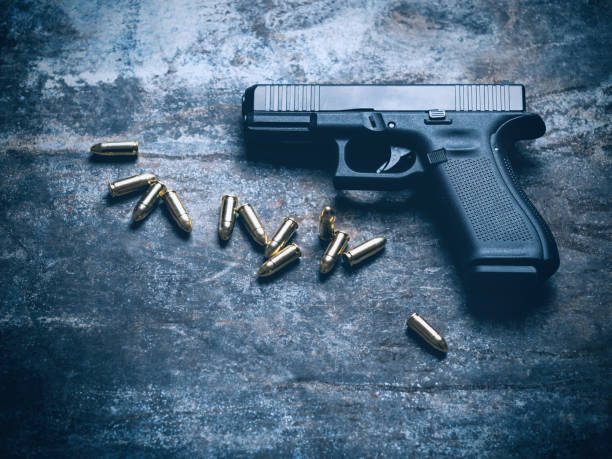
Top Features to Consider When Buying a Firearm for Hunting or Personal Defense
When choosing a firearm for hunting or personal defense, several factors come into play. Each feature can significantly impact the firearm’s performance, usability, and suitability for your specific needs. Whether you are an experienced shooter or a first-time buyer, carefully evaluating these features will help ensure that you make the best decision.
1. Caliber and Ammunition Compatibility
Selecting the right caliber is crucial to both hunting and self-defense applications. Consider the following:
– Hunting: Choose a caliber suited to your intended prey. For small game, popular calibers include .22 LR and .17 HMR. For larger game like deer or elk, consider .308 Winchester or .30-06 Springfield.
– Self-Defense: A balance between stopping power and recoil is essential. Common self-defense calibers include 9mm Luger, .40 S&W, and .45 ACP for pistols; while 12-gauge shotguns are effective in close quarters.
Ammunition cost and availability should also be taken into account to ensure you can regularly train without excessive expense.
2. Ergonomics and Handling
The firearm should feel comfortable in your hands and be easy to handle under real-world conditions:
– Grip size plays an important role in maintaining control during use. A poorly fitting grip could affect accuracy, especially during rapid fire situations. – Weight distribution influences fatigue during prolonged use (e.g., hunting trips) and ease of maneuvering in close quarters (e.g., home defense). – Controls like safeties, magazine releases, or slide locks should be intuitive and easy for you to operate.
When possible, test handling various firearms at a local gun store or range before making a purchase.
3. Action Type
The action refers to how a firearm loads, fires, and ejects spent cartridges:
| Action Type | Best Use Cases | Pros | Cons | |——————-|————————————————–|—————————|————————-| | Bolt-Action | Precision hunting | High reliability & accuracy | Slow rate of fire | | Semi-Automatic | Self-defense & medium/large game hunting | Faster follow-up shots | Requires regular maintenance | | Pump Action | Home defense & turkey/small-game hunting | Durable & versatile | Requires manual operation | | Lever Action | Hunting (classic firearms enthusiasts) | Lightweight & nostalgic | Limited ammo capacity |
Each action type offers distinct advantages based on your intended purpose.
4. Reliability Under Stress
For personal defense situations where lives may depend on split-second reactions—or during challenging outdoor conditions while hunting—firearm reliability is critical:
– Look for models with proven track records of functioning well even when exposed to dirt, moisture, or extreme temperatures. – Brand reputation often reflects consistent quality; manufacturers like Glock (pistols), Benelli (shotguns), and Ruger (rifles) are widely regarded as dependable options.
5. Customization Options
Modern firearms often allow buyers to customize components such as stocks, barrels, sights/scopes, grips, triggers, and more:
– Tactical shooters might prioritize mounting options for accessories like red-dot sights or flashlights. – Hunters may want adjustable stocks for better fitment in various field conditions. Customizability not only enhances performance but also allows personalization tailored toward individual preferences.
Additional Considerations:
- Cost: Determine your budget beforehand—including anticipated expenses beyond just the firearm itself (e.g., ammunition costs). Entry-level options are available in virtually every category without compromising safety standards.
- Training Requirements: Some firearms have steeper learning curves than others; consider investing time into training courses if necessary to handle your chosen weapon responsibly.
- Legal Compliance: Ensure that you’re adhering fully toward local laws regarding ownership permits/licenses prior-to-purchase decisions.
- How to Buy Handguns Online: Choosing Between a Revolver and a Pistol
- Handguns for Sale: Choosing Between a Revolver and a Pistol
- Exploring the Key Differences Between Pistols and Revolvers: Handguns for Sale
- Revolver vs Pistol Pros and Cons Examined for Choosing the Right Firearm
- Revolver vs. Semi-Auto Pistol: How to Buy Handguns Online for Your Needs
- Understanding Revolvers vs Pistols: A Guide to Buy Handguns Online
- How to Buy Handguns Online: Comparing Pistols and Revolvers for All Skill Levels
- How to Buy Handguns Online: Key Differences Between Revolvers and Pistols Explained
- How to Buy Handguns Online: Revolver vs Pistol and Key Differences