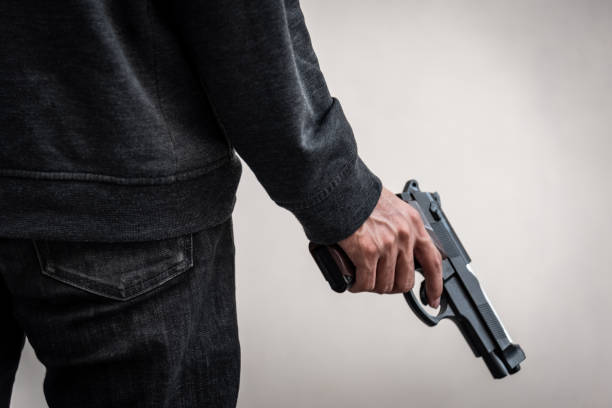
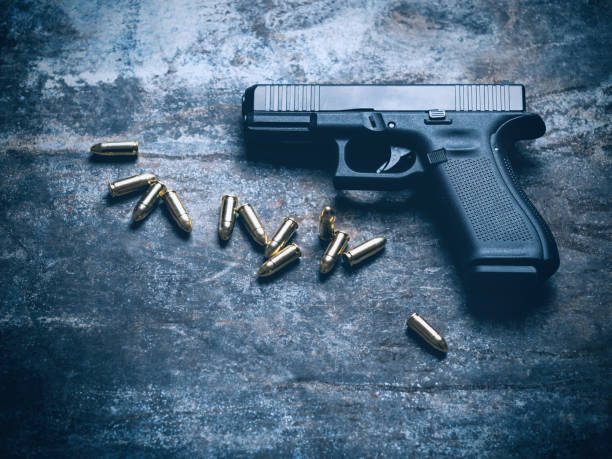
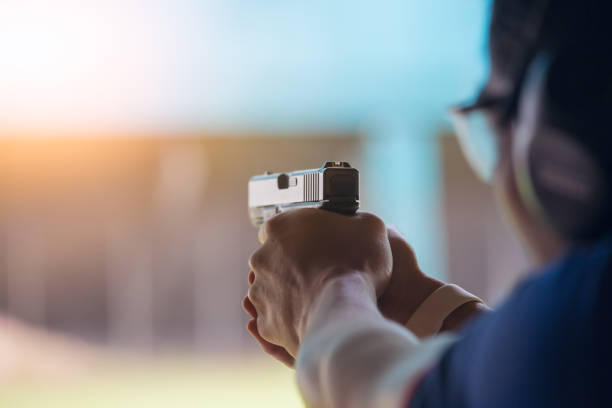
Handguns for Sale: Choosing Between a Revolver and a Pistol
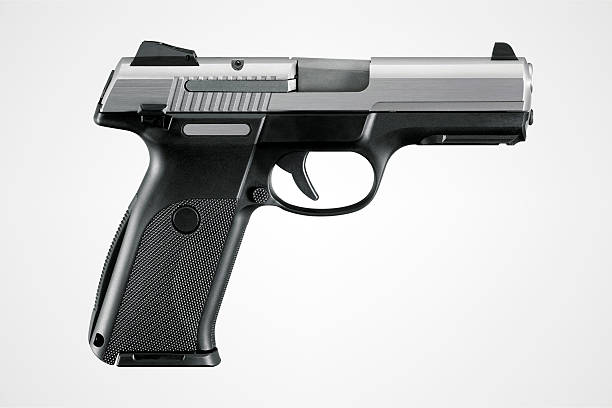
When choosing a firearm, deciding between a revolver and a pistol is a critical step that requires careful consideration of your specific needs, preferences, and intended use. Both types of handguns offer distinct advantages and challenges. A clear understanding of these differences can help you make an informed decision.
Key Differences Between Revolvers and Pistols
| Feature | Revolver | Pistol |
| Ammunition Capacity | Typically 5-6 rounds | 10-15+ rounds (depending on the model) |
| Ease of Use | Simple mechanism; less prone to jams | Requires practice to manage malfunctions |
| Reload Speed | Slower reload time | Faster reload with magazines |
| Size and Weight | Generally heavier and bulkier | Lighter and more compact designs |
These distinctions are influenced by the handgun’s design. While revolvers use a rotating cylinder to house ammunition, pistols rely on magazines to load rounds into the chamber.
Advantages of Choosing a Revolver
- Reliability:
Revolvers are known for their mechanical simplicity, which makes them highly reliable in various conditions. They rarely jam or malfunction because they lack the slide mechanism found in pistols. - Ease of Operation:
For beginners or those unfamiliar with firearms, revolvers are often easier to handle. The lack of complex mechanisms means fewer steps when loading or firing the weapon. - Durability:
Thanks to their solid construction and minimal moving parts, revolvers often last longer with proper maintenance. - Variety of Calibers:
Revolvers can accommodate a wide range of calibers, from small rounds like .22 LR for target shooting to powerful ones like .357 Magnum for defense.
Advantages of Choosing a Pistol
- Higher Ammo Capacity:
Pistols typically hold more rounds than revolvers due to their magazine-fed design, making them suitable for scenarios where higher capacity is advantageous. - Faster Reloading:
With practice, reloading a pistol using magazines is quicker compared to manually loading individual chambers in a revolver. - Compactness:
Many modern pistols are designed with concealment in mind—slim profiles and lightweight designs make them easier to carry discreetly. - Accessory Options:
Pistols often feature rails or attachment points for accessories like lights or laser sights, enhancing versatility.
Factors to Consider When Choosing Between Them
- Purpose: Are you buying the firearm for self-defense, sport shooting, hunting, or as part of a collection? Your intended use plays a significant role in determining which firearm is better suited.
- Experience Level: Beginners may find revolvers more approachable due to their simplicity.
- Ergonomics: Test how each firearm feels in your hand; comfort influences accuracy over time.
- Maintenance Requirements: Pistols generally require more upkeep because they have more moving parts compared to revolvers.
- Budget: Both types vary significantly in price depending on brand and model.
Ultimately, whether you choose a revolver or pistol depends on personal preference aligned with practical considerations such as usage scenario and ease of operation. Each has its strengths tailored toward specific needs—understanding these nuances ensures you select one that matches your requirements effectively while meeting safety standards at all times.
Top Reasons to Buy Handguns Online for Your Firearm Needs
When choosing a firearm, deciding between a revolver and a semi-automatic pistol is often the first step. Revolvers are widely regarded as reliable, straightforward, and versatile firearms, making them an excellent option for specific needs. Below, we’ll explore the key benefits of opting for a revolver to help you make an informed decision.
1. Simplicity in Design and Operation
One of the most notable advantages of a revolver is its simplicity. Revolvers are mechanically less complex than semi-automatic pistols, which translates to ease of use in high-pressure situations. This straightforward design makes them particularly appealing for beginners or those who value reliability over complexity.
Key features contributing to simplicity include:
– No magazine: Unlike semi-autos, revolvers do not require magazines. This eliminates concerns about feeding malfunctions or magazine maintenance.
– Minimal manual action: Most revolvers operate using either single-action or double-action triggers, reducing the number of steps needed for operation.
2. Exceptional Reliability
Revolvers are famous for their ability to function flawlessly under various conditions, including extreme temperatures or adverse environments where dirt and debris may hinder other firearms.
Benefits tied to reliability include:
– Rarely jam or misfire due to their simple mechanism.
– Can operate effectively even after prolonged storage without extensive maintenance.
In critical situations such as home defense or personal protection, this reliability can provide peace of mind.
3. Ease of Maintenance
Maintaining a revolver is significantly simpler compared to modern semi-automatic pistols that involve disassembly and cleaning numerous small parts.
Maintenance benefits include:
– Fewer moving parts reduce the risk of mechanical failure over time. – Cleaning typically involves basic supplies like solvent and patches for the cylinder and barrel.
This ease makes revolvers especially favorable for individuals who may not have significant experience in firearm care.
4. Versatility in Caliber Selection
Revolvers offer flexibility in terms of ammunition choice compared to some semi-auto pistols limited by design constraints.
A few examples include:
| Caliber Type | Use Case | Notes |
|————–|———–|——-| | .22 LR | Practice/Training | Low recoil and cost-effective | | .38 Special | Self-defense | Balanced performance | | .357 Magnum | Hunting/Self-defense | High power with versatility |
Many .357 Magnum revolvers can also chamber .38 Special rounds, offering two options in one firearm.
5. User-Friendly Ergonomics
Revolvers are often designed with an intuitive feel that users find comfortable to handle during extended periods at the range or during training exercises.
Advantages related to ergonomics include:
– Rounded grips contribute to improved comfort when firing multiple rounds. – Weight distribution feels balanced compared to lighter polymer pistols that can amplify recoil perception.
6. Immediate Visual Inspection
Unlike semi-autos where checking chamber status may require pulling back the slide, a loaded or empty cylinder on a revolver can be quickly verified with just a glance—enhancing situational awareness.
Whether you’re considering buying your first firearm or adding another piece to your collection, understanding these benefits can help determine if a revolver aligns with your priorities such as simplicity, reliability, and versatility over other designs available today.
Top Reasons to Buy from a Handguns Online Store for Your Firearm Needs
When selecting a firearm, one of the major considerations is the type of gun that aligns with your needs, experience level, and intended use. For many, the revolver remains a popular choice due to its simplicity, dependability, and ease of operation. Below, we explore the key benefits of choosing a revolver.
1. Reliability in Functionality
- Fewer moving components reduce the likelihood of malfunctions.
- They are not affected by issues such as failure-to-feed or stovepiping (common problems with semi-auto pistols).
- Revolvers can fire even in adverse conditions like dirt or moisture.
This makes them an excellent option for individuals who prioritize reliability above all else.
2. Ease of Use for Beginners
- No manual safeties or complex mechanisms add operational simplicity.
- Loading and unloading are easy with a swing-out cylinder or loading gate.
- You simply point and pull the trigger—no slide manipulation is required, which can be challenging for some users.
Revolvers are also less intimidating for first-time users who want a dependable firearm without needing extensive training right away.
3. Reduced Maintenance Needs
- There’s less cleaning involved since there are fewer crevices where dirt can accumulate compared to semi-auto pistols.
- The enclosed cylinder protects ammunition from external elements.
- Fewer internal parts mean fewer components that require regular care or replacement.
With basic upkeep such as regular cleaning after use, revolvers can last generations without significant issues.
4. Versatility in Ammunition
| Caliber | Description | Application |
| .38 Special | Lower recoil; ideal for target practice | Training and self-defense |
| .357 Magnum | Higher power; excellent stopping ability | Hunting or personal protection |
This versatility allows users to tailor their shooting experience based on specific needs while ensuring compatibility across various scenarios.
5. Superior Handling for Defensive Scenarios
- Double-action/single-action triggers provide flexibility during emergencies.
- The ability to visually confirm that the gun is loaded by inspecting the cylinder enhances safety during critical moments.
Additionally, revolvers do not eject spent casings onto the ground as semi-autos do—a beneficial factor if maintaining privacy about your firearm usage is important.
Final Considerations
While revolvers may lack some features offered by modern semi-auto pistols—such as higher capacity magazines—they remain an appealing choice for those seeking reliability, ease of use, and versatility in everyday carry or home defense situations. Their durability ensures that they will continue serving efficiently over time with minimal maintenance required—all valuable attributes worth considering when selecting your next firearm.
How to Correctly and Safely Draw Your Gun for Effective Use
Properly and safely drawing a firearm is an essential skill for responsible gun owners. Whether you’re carrying for personal protection, training, or sport, having a correct and consistent draw technique ensures both safety and efficiency. The process requires practice, discipline, and adherence to established safety protocols.
Steps to Safely Draw Your Firearm
- Assess the Situation
Before drawing your gun, ensure that the situation warrants its use. Drawing without clear intent can escalate situations unnecessarily. - Maintain Trigger Discipline
Keep your finger straight and off the trigger until you have fully drawn your firearm and are ready to fire. This minimizes the risk of accidental discharge. - Establish a firm grip on the gun while it is still holstered.
- Ensure your hand covers the grip properly before you begin the draw.
- Pull the firearm upward until it clears the holster.
- Be conscious of your clothing or any obstructions that could impede this motion.
- Rotate your firearm toward your target as you bring it up.
- Align it with both hands in a proper shooting stance if time allows.
- Aim Responsibly
Only point your weapon at something you are prepared to shoot. Always be aware of what is in front of and beyond your target.
Important Safety Tips During Gun Draws
- Be Mindful of Your Environment: Practice situational awareness to ensure bystanders or non-threats are not in harm’s way.
- Practice Slowly at First: Perfecting technique takes repetition. Start slow with unloaded firearms before gradually increasing speed.
- Avoid Sweeping Movements: Never allow the muzzle of your gun to point at yourself or others during any part of the draw process.
- Use Appropriate Gear: A good holster should securely hold your firearm while allowing smooth access during a draw.
The Importance of Reholstering Safely
- Keep your finger off the trigger while reholstering.
- Look down briefly at the holster opening to avoid accidentally catching clothing or skin in the mechanism.
- Ensure full insertion into the holster before releasing grip pressure.
| Common Mistakes | Why They Are Dangerous |
| Drawing too quickly without control | Can lead to accidental discharge |
| Poor grip from beginning | Reduces aim accuracy |
| Neglecting trigger discipline | Increases risk of misfire |
| Using an ill-fitted holster | May cause difficulty during both draw and reholstering |
Practicing Regularly for Confidence
Repetition builds muscle memory, which can be crucial in high-pressure situations where split-second decisions matter most. Regularly practice drawing techniques using dry-fire drills (unloaded firearms) or work with certified instructors for guidance on form improvement.
By mastering safe drawing techniques, gun owners not only enhance their own confidence but also contribute positively toward responsible firearm practices within their communities.
The Advantages of Iron Sights for Precision Shooting and Accuracy
Iron sights are one of the most traditional and widely used sighting systems in firearms. They are a simple, efficient, and reliable option for shooters who prioritize accuracy and precision. Whether you are a novice firearm owner or an experienced shooter, understanding the advantages of iron sights is crucial. Here’s a detailed look at why iron sights remain a trusted option.
Benefits of Iron Sights
- Iron sights are mechanical and do not rely on batteries or electronic components.
- They function in all weather conditions, making them dependable in critical situations.
- Fewer moving parts mean less chance of malfunction during use.
- Constructed from robust materials such as steel or aluminum, iron sights withstand heavy use.
- Resistant to impact, they remain functional even under rough handling or extreme environments.
- Compared to advanced optics or reflex sights, iron sights are cost-effective.
- This makes them an ideal choice for those on a budget without compromising on functionality.
- Using iron sights requires proper alignment between the front post and rear notch, encouraging shooters to develop foundational skills.
- Mastery over these skills enhances accuracy even when transitioning to more advanced sighting systems later on.
- Due to their minimalistic design, they do not add bulk or significant weight to your firearm.
- This makes them ideal for concealed carry handguns or rifles where portability is key.
Types of Iron Sights
| Type | Description |
| Fixed Sights | Non-adjustable; designed for simplicity and reliability in standard ranges. |
| Adjustable Sights | Allow elevation and windage adjustment for greater precision at varying distances. |
| Aperture (Peep) Sights | Feature a small hole through which you align with the front sight post; common in rifles. |
| Open Sights | Consist of two components: a front post and rear notch; frequently used on pistols. |
Practical Applications
- Self-Defense: In high-stress situations where simplicity matters, iron sights provide an intuitive aiming method without relying on electronics.
- Hunting: Many hunters prefer adjustable open sights due to their adaptability across varying shooting distances.
- Target Practice: Practicing with iron sights hones fundamental skills like focus and sight alignment.
Tips for Using Iron Sights Effectively
- Focus on the front sight rather than the target or rear sight to ensure proper alignment.
- Maintain consistent eye relief (distance from your eye to the rear sight) to avoid parallax errors.
- Practice regularly under different lighting conditions as shadows can affect visibility.
By integrating iron sights into your routine shooting practice, you lay a solid foundation of skills while enjoying their reliability and durability—critical attributes that make them an enduring choice among firearm enthusiasts worldwide.
Dressing Smartly Around Concealed Carry for Safety and Comfort
When carrying a concealed firearm, dressing appropriately is essential to ensure both safety and comfort. The way you dress can significantly impact your ability to conceal your weapon effectively, maintain ease of movement, and avoid drawing unnecessary attention. Below are some important considerations and tips to help you dress smartly for concealed carry.
Considerations for Clothing Choices
- Concealment: Choose clothing that provides enough coverage to hide your firearm without printing (the outline of the gun showing through fabric).
- Opt for patterns or darker colors to help mask firearm outlines.
- Looser-fitting garments like untucked shirts or jackets work better for concealment.
- Comfort: Since you may need to carry for extended periods, prioritize comfort when selecting clothing.
- Use breathable fabrics and avoid tight belts that can dig into the holster or pressure points around the waist.
- Layering can provide additional cover while allowing flexibility for weather changes.
- Accessibility: Ensure your attire permits quick access to your firearm in case of emergencies.
- Avoid overly restrictive clothing that could hinder your draw speed.
- Practice accessing your firearm while wearing different outfits to ensure consistency in response time.
Key Wardrobe Options
| Clothing Type | Features | Benefits |
| Jackets/Outerwear | Lightweight, loose-fitting with longer hems | Covers waistband holsters effectively |
| Concealed Carry Shirts | Designed with built-in holster compartments | Offers all-in-one concealment solution |
| Pants with Belt Loops | Durable belts support heavier firearms | Prevents sagging or discomfort |
| Undershirts | Moisture-wicking materials | Reduces irritation from direct contact |
Practical Tips by Season
- Summer: Opt for lightweight fabrics like cotton or linen paired with an inside-the-waistband (IWB) holster. A simple polo shirt can work well if untucked.
- Winter: Heavier jackets provide excellent concealment options, making shoulder holsters a viable choice during colder months.
- Formal Wear: Suits or blazers allow appendix carry or shoulder rigs without sacrificing professional appearance.
Accessories That Complement Concealed Carry
- Gun Belts: Designed specifically to handle the weight of firearms without losing shape over time.
- Holsters: Invest in high-quality IWB, outside-the-waistband (OWB), or pocket holsters based on personal preference and clothing style.
- Clothing Modifications: Some individuals choose garments tailored with reinforced stitching for added durability around attachment points.
Dressing smartly while carrying concealed is not just about blending in — it’s about creating a balance between functionality, safety, and personal comfort. By being mindful of these factors, you can ensure that you are prepared while maintaining a discreet profile at all times.
Exploring the Best Holster Options for Secure and Convenient Gun Carry
Selecting the right holster is an essential aspect of responsible gun ownership. A high-quality holster provides security, accessibility, and comfort while ensuring that your firearm is safely carried. Here, we’ll explore some of the best holster options available, their features, and considerations to help you make an informed decision.
Types of Holsters
- Positioned inside the pants for better concealment.
- Ideal for concealed carry as they reduce printing (visible outline of a firearm).
- Offers comfort when paired with proper attire.
- Worn outside the pants, often on a belt.
- Easier to access but less discreet compared to IWB holsters.
- Suitable for open carry or at-home use.
- Fits inside a pocket and conceals small firearms effectively.
- Lightweight and simple to use but may be less secure than other options.
- Worn across the shoulders with straps, positioning the firearm under one arm.
- Comfortable for long periods but can be difficult to conceal under light clothing.
- Secured around the ankle; ideal for carrying backup firearms.
- May not be practical for quick access in emergencies.
Key Features to Look For in a Quality Holster
- Retention System:
A good holster should securely hold your firearm in place while still allowing quick access when needed. - Passive retention (friction-based).
- Active retention (uses locks or straps).
- Trigger Guard Protection:
The design must cover the trigger completely to prevent accidental discharge during carry or handling. - Material Quality:
High-quality materials like leather, Kydex, or nylon ensure durability and comfort: | Material | Pros | Cons | |————–|——————————–|———————————–| | Leather | Comfortable; molds over time | Requires maintenance | | Kydex | Durable; holds shape well | Can feel rigid against the body | | Nylon | Lightweight; affordable | Less durable than leather/Kydex | - Adjustability:
Adjustable cant angles (tilt) allow customization for personal draw preferences. - Comfort:
A well-designed holster should not dig into your body or cause discomfort during extended wear.
Choosing the Right Holster for Your Needs
To select a suitable option: – Consider your primary purpose—concealed carry vs open carry. – Assess your daily activities and wardrobe compatibility. – Test different holsters if possible to gauge comfort and ease of use. – Research reviews from reputable sources before purchasing.
Investing in a quality holster ensures you’re equipped with a secure yet convenient method of carrying your firearm responsibly at all times.
- How to Buy Handguns Online: Choosing Between a Revolver and a Pistol
- Handguns for Sale: Choosing Between a Revolver and a Pistol
- Exploring the Key Differences Between Pistols and Revolvers: Handguns for Sale
- Revolver vs Pistol Pros and Cons Examined for Choosing the Right Firearm
- Revolver vs. Semi-Auto Pistol: How to Buy Handguns Online for Your Needs
- Understanding Revolvers vs Pistols: A Guide to Buy Handguns Online
- How to Buy Handguns Online: Comparing Pistols and Revolvers for All Skill Levels
- How to Buy Handguns Online: Key Differences Between Revolvers and Pistols Explained
- How to Buy Handguns Online: Revolver vs Pistol and Key Differences